
For consumers, finance is also an issue in energy efficiency. Currently, worldwide, buildings and construction account for around 40% of energy-related carbon emissions and 36% of energy consumption. [1] If the UAE is to meet its emissions goals, then residents of these buildings have to be helped financially to retrofit, while green building codes enforce more energy efficient construction.
On the latter, the UAE has a range, depending on the particular emirate. Regulations on sustainability in the real estate sector thus include Abu Dhabi’s Estimada Pearl Rating System, the Dubai Green Building System (Al Sa’fat), the Ras Al Khaimah Energy Efficiency and Renewable Energy Strategy 2040 and the Abu Dhabi Vision 2030, which also highlights building efficiency.
On the former, the picture is less clear. Currently, JLL estimates that in the Dubai office market, for example, occupiers can expect to pay a 5%-10% premium on green certified offices. For larger companies, these certifications may be a vital part of their overall decarbonisation strategy and worth the premium, but supply of such spaces is currently insufficient to meet demand, while ‘brown’, non-green certified spaces can offer discounts that make retrofitting a financially feasible option. [2]
For households, energy efficiency work currently also means self-financing, or bank loans under the above-mentioned green finance schemes.
Under the updated DSM Strategy 2030, Dubai plans to retrofit some 30,000 buildings itself by that date, [3] with power and water the main targets for retrofit funding. The Strategy aims to reduce power consumption in buildings by 1.4 TWh, while cutting water consumption by 4.9 billion imperial gallons (BIG). [4]
Abu Dhabi, meanwhile, is targeting 3,000 buildings over the same period and Ras Al Khaimah 3,000 by 2040. [5] In Abu Dhabi, too, several government agencies have also signed up with Abu Dhabi Energy Services’ retrofitting scheme, yet no similar large scale service exists in the private sector, while building codes are for new buildings, rather than mandates for old ones. [6]
Read the label
Making sure appliances meet good energy efficiency standards is also key to the transition. In the UAE, the Ministry of Industry and Advanced Technology (MoIAT) nowadays certifies household electrical and electronic (E&E) items according to their energy efficiency, [7] while retailers have launched campaigns, such as Green Corner, to focus on appliances that save power and water. [8]
High energy efficiency does usually come at a price, however, with consumers having to balance low energy usage over time against higher up-front costs. Consumer loans are therefore a key part of the energy transition at home, financing more energy efficient fridges, washers and TVs.
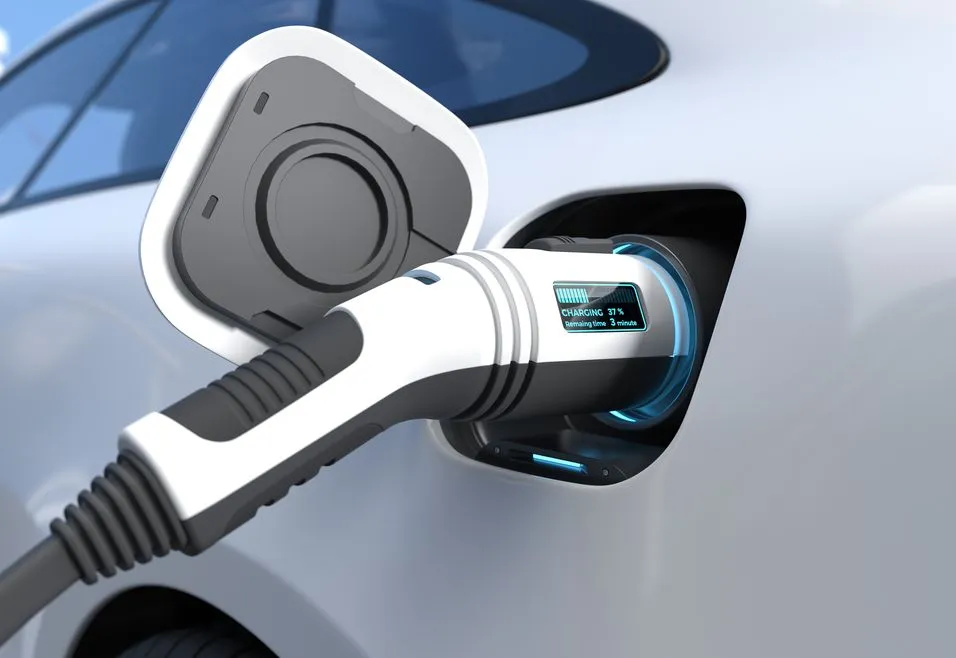
A similar issue surrounds the shift to EVs by individuals, businesses and municipal authorities.
Under its updated Energy Strategy 2050, the UAE has an ambitious plan of 50% of all vehicles on the country’s roads being EVs by 2050. [9]
For individuals, several UAE banks offer eco-friendly car loans, such as Emirates NDB and NBF, which both offer a Green Auto Loan. [10] Both are at discounted rates, while Emirates Islamic offers a shariah-compliant alternative.
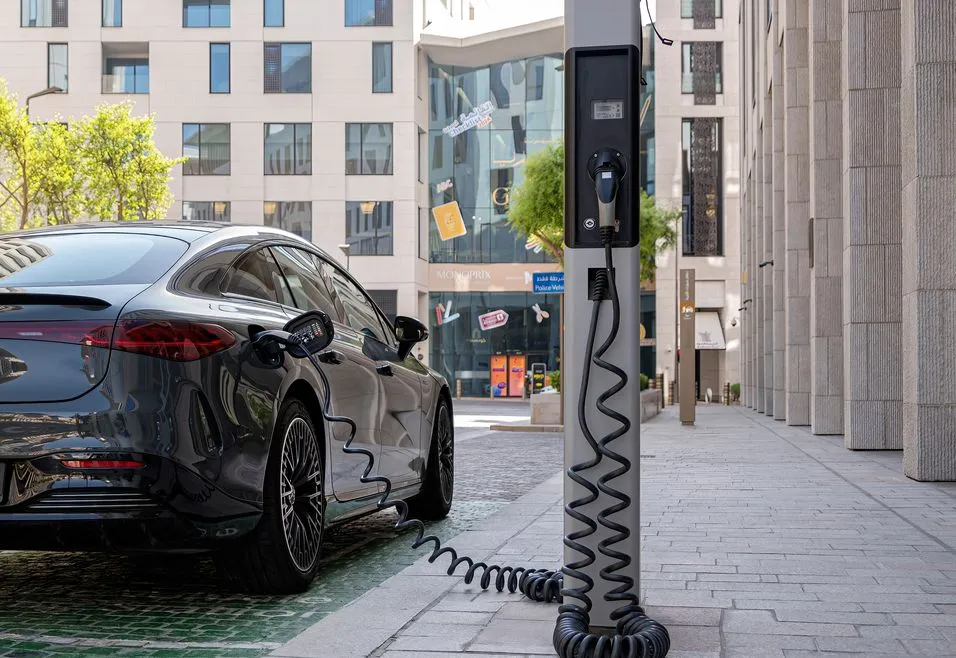
At the same time, the government has introduced some financial incentives for EV purchase, such as reduced registration and renewal charges, a waiving of the Salik highway toll charges, free parking zones for EVs and – perhaps the most significant – free public charging stations, with DEWA alone providing more than 100 of these around the UAE. [11]
Dubai’s Al Sa’fat policy also stipulates that designated parking for EVs, hybrids and car pool cars should be provided at new developments. [12]
Meanwhile, commercial EV fleets also typically enjoy discounted vehicle prices, given the bulk-buy nature of these purchasers. Recent times have also seen a number of new entrants into the UAE commercial EV market, driving competition and further reducing costs. [13]
The UAE has therefore sought to combine a variety of funding sources, both public and private, with a facilitating role from government – at both the federal and emirate-level.
While more needs to be done in terms of mobilising funding for energy efficiency and retrofitting schemes, particularly regarding older buildings and neighbourhoods, the country can already point to some major progress.