Producers have a wide range of challenges to face in the energy transition, from boosting generation of renewable energy to reducing emissions in their existing plants and processes. In many cases, the ability to meet these challenges also relies on the ability of producers to source materials that in themselves are in limited or restricted supply. Principle among these is the range of exotic and not-so-exotic elements known as ‘critical minerals’ (CMs).
These range from copper to lithium, bauxite to manganese, with the International Energy Authority (IEA) listing a total of 33 CMs on its Critical Minerals Data Explorer. [1]
With a typical electric vehicle (EV) requiring six times the CM input of a conventional car and an offshore wind plant requiring 13 times that of a similarly sized gas-fired plant, the level of demand for CMs is set to rise exponentially in the years ahead. [2]
Fortunately, the UAE has been active in expanding its reach across global and local supply chains in an effort to secure CM resources – although much still remains to be done.
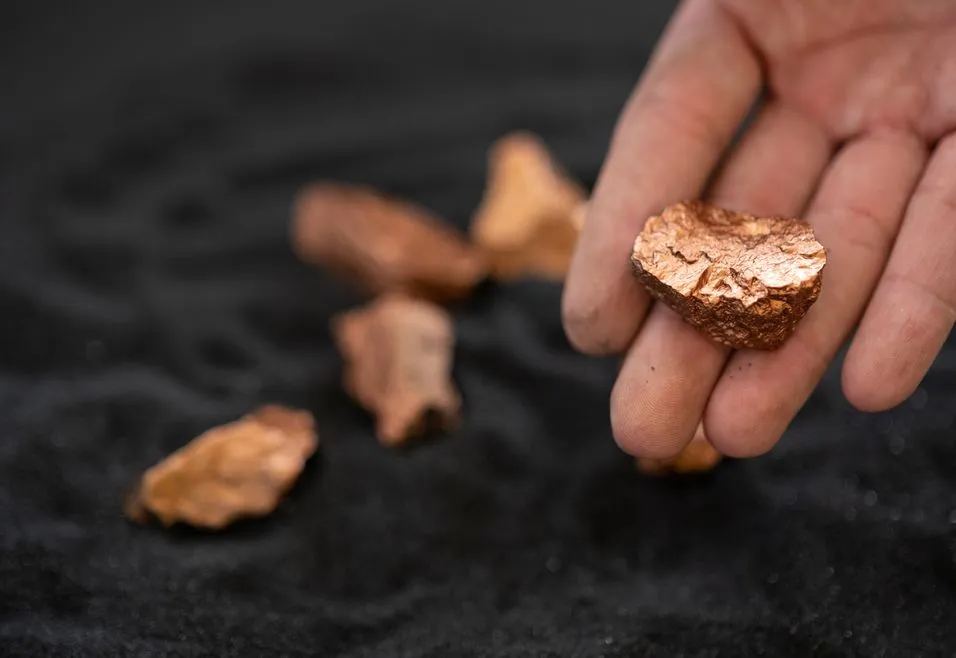
Currently, the main thrust of global competition for CMs has tended to focus on the main elements necessary for battery production.
These are copper, nickel, graphite, cobalt and lithium. In addition, aluminium is a key CM, identified by the World Bank in 2020 as a “cross-cutting” CM because of its use in a wide variety of existing and potential green technologies. [3]
In the Gulf Cooperation Council (GCC) region, Saudi Arabia is currently expanding its domestic mining industry with an eye to increasing domestic production of these key CMs. Oman, too, has welcomed in overseas miners to develop huge blocks, including the highly promising Block 21 nickel-laterite concession. [4]
In the UAE, however, while there are deposits of bauxite – necessary for aluminium production – and copper in the Hajar Mountains in the north of the country, [5] production from these remains relatively small.
The bulk of the raw materials used by the country’s extensive local copper, aluminium, nickel and other metallic product manufacturing industries is therefore imported.
Sourcing these key CMs abroad is therefore seen as increasingly vital, with the UAE now investing heavily in overseas CM mining industries.
The UAE’s main aluminium industry, Emirates Global Aluminium (EGA), has invested around $1.4 billion in the EGA-Guinea Alumina Corporation bauxite mine in the Republic of Guinea. Located in a 690 square kilometre (km2) concession, the mine meets the needs of EGA’s two UAE-located smelters – EMAL and DUBAL – while also supplying other customers, such as China’s Bosai. [6]
In copper, in December 2023, the UAE’s International Resources Holdings (IRH) invested $1.1 billion in Zambia’s Mopani Copper Mines in return for a 51% stake. The investment should see the mine’s production jump from 72,694 tonnes in 2022 to 200,000 tonnes over the next three years. [7]
A further, multi-facetted overseas investment is likely to be in Pakistan. A GCC-Pakistan free trade deal was signed in September 2023, with the National Trust (NT), the UAE’s largest importer and supplier of minerals, following up quickly with a bauxite refining deal in November. [8] The NT plans both raw and value-added minerals expansion in Pakistan, which has major and largely unexploited deposits of a range of CMs. [9] A free trade deal with mining giant Australia is also currently in discussion, with expectations of an agreement by the end of 2024. This might also see the UAE invest in Australia’s CM industry. [10] [11]
In 2022, the UAE also committed to the $100 billion Partnership for Accelerating Clean Energy (PACE) with the US. Amongst its aims is the galvanization of investment in “mining, production and processing of critical minerals”. [12]
The UAE has also been leveraging its global financial and commodity market status to support CM development.
A recent example of this is Abu Dhabi-based metals digital trader Open Mineral, which, in collaboration with Singapore’s TradeFlow, launched its CM Trade Finance Fund and Trading Platform in December 2023. This hopes to digitally de-risk global CM trade flows by combining the latest fintech with commodity flows in CMs such as copper, lithium and zinc. [13]
Recycle, replace
Another key way to meet the CM challenge is by developing the circular economy.
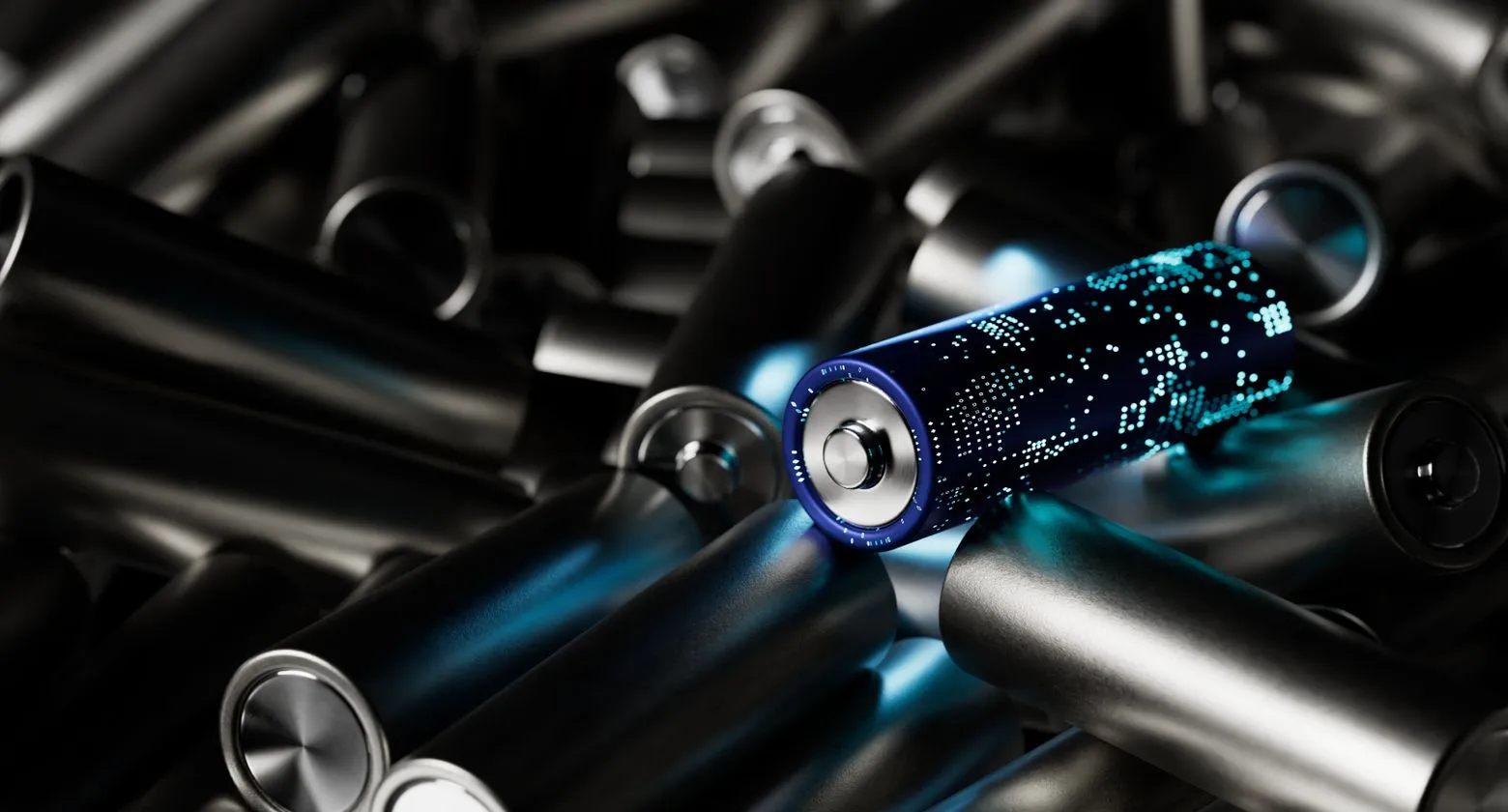
Stripping copper, lithium and other materials out of finished batteries, for example, can be a profitable enterprise, with Canadian recycler Li-Cycle Corp. predicting 10%-20% of global lithium demand being met this way by 2030. [14]
Dubatt has the UAE’s first lead battery recycling plant, in Dubai, while in December 2023, the UAE’s Ministry of Energy and Infrastructure, India’s Lohum and BEEAH Group announced they would open the country’s first lithium battery recycling plant, with a capacity of 3,000 tonnes of lithium-Ion batteries per year. [15]
New technologies to find substitutes for CMs are also moving fast. Aluminium-Ion or sodium-Ion batteries, for example, could replace lithium-Ion batteries. [16] Technologies are also being mobilised to help boost extraction, without causing increased pollution.
CMs are thus likely to see a great deal more attention in the years ahead, both in the UAE and beyond.