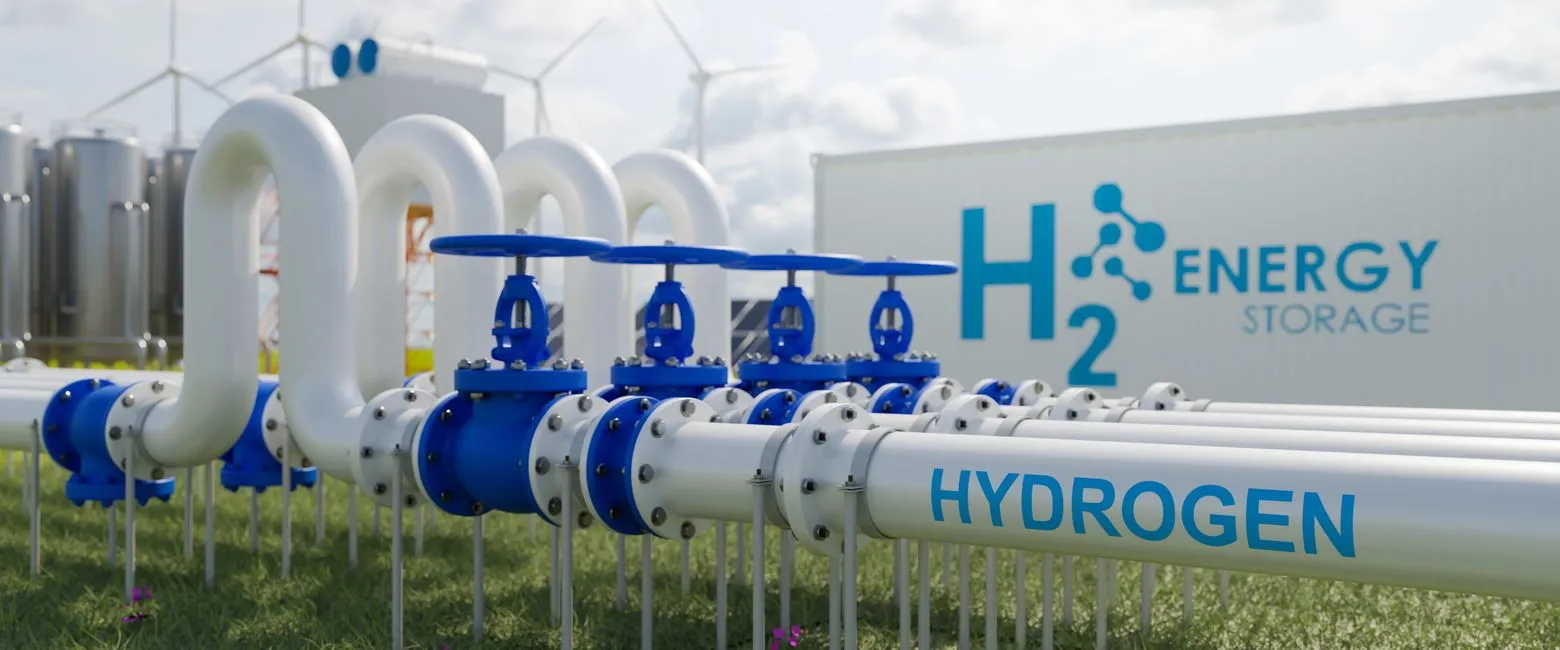
A key step in the UAE’s transition to a clean energy driven economy is its National Hydrogen Strategy. Unveiled by the Ministry of Energy and Infrastructure in 2023, the strategy sets out objectives for hydrogen production and usage, as well as measures for the development and enactment of a comprehensive regulatory framework for a broad-based hydrogen industry.
Under the strategy, the UAE’s hydrogen regulatory framework will be fully operational by 2031 at the latest, enabling the transition to a transparent hydrogen economy.
Building on a number of measures already in place – such as the technical regulations on hydrogen powered vehicles brought in back in 2019 – the strategy then sets low carbon standards, enacts incentives for adoption in key hard-to-abate sectors such aluminium, steel, cement, transport and power. It has also already been built on in Abu Dhabi with the November 2023 new policy framework for low carbon hydrogen released by the emirate’s Supreme Council for Financial and Economic Affairs (SCFEA). [1]
The strategy also sets out plans for the creation of two hydrogen production hubs – or “oases” by 2031 and five by 2050. The UAE is set to use a total of 1.4 million tonnes (Mt) per annum of hydrogen by 2031, rising to 7.5 Mt by 2040 and 15 Mt by 2050. [2]
It also creates the Hydrogen Innovation Fund, which will finance hydrogen research and development projects in the UAE. [3]
In June 2024, the Abu Dhabi Department of Economic Development (ADDED) also announced it had an agreement for Broaden Energy to set up the first hydrogen equipment manufacturing facility in the emirate, with a $272 million investment further localising the UAE’s hydrogen roll out. [4]
At the same time, the UAE has been investing in hydrogen production abroad, too. In September 2024, ADNOC announced a multi-billion dollar deal with Exxon for a 35% stake in its potentially lucrative blue hydrogen Baytown project in Texas. [5]
Local to Global
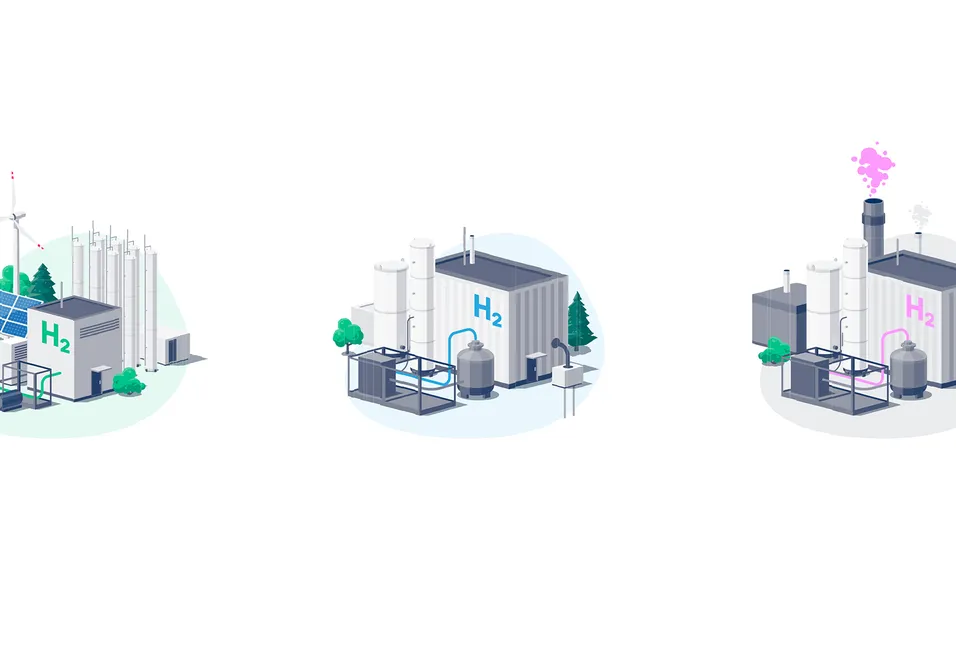
Some key elements of the regulatory framework have already been put in place. The UAE has adopted the internationally accepted colour coding for hydrogen production, with
the UAE currently focusing on three of these as the foundation for its hydrogen regulatory regime – although it maintains an interest in the whole spectrum.
The three are: green hydrogen, designating gas produced through water electrolysis utilising renewable electricity; blue hydrogen – that is sourced from fossil fuels but with the CO2 emissions captured and stored underground; and pink hydrogen, that generated using power from nuclear reactors. [6]
The 2031 target of 1.4 Mt therefore breaks down into 1 Mt of green – half produced domestically, half imported – 0.4 Mt of blue and 0.0075 Mt of pink hydrogen. [7] It is estimated that by 2050, these two will each account for 47.5% of the UAE’s total output with pink making up the balance.
Rules and regulations
As a new industry – hydrogen has up to now been largely confined to marginal, chemical and petrochemical uses – a whole range of standards are still being debated globally concerning its metrology, standardisation, certification, production, handling, transportation and a host of other technical requirements.
Indeed, hydrogen processes are complex, with a new set of quality infrastructure (QI) standards required for the industry to take off sustainably and safely. [8]
With the UAE also looking to become a major hydrogen exporter, these global standards will only become more significant. [9]
Standards authorities such as the ISO and IEC are already working on hydrogen, along with bodies such as the United Nations Common Regulatory Arrangements initiative. [10] The EU and US are also enacting regulatory packages covering all aspects of the hydrogen energy chain, with the EU in particular a potentially large export market for the UAE’s green hydrogen, in particular. [11]
The industry will also need to see a system of incentives put in place to stimulate development. Ideas currently being discussed include carbon pricing mechanisms and a cap-and-trade system. Cost supports and revenue support guarantees may also be provided, along with low-tax and land grants for projects. A market price for clean hydrogen may also be set for the 2026-2028 period, a crucial time in sector development as current projects roll out. [12]
Indeed, one of the challenges for the UAE, as for other producers, in establishing its regulatory regime for hydrogen is the rapidly developing nature of the sector.
Standards that may be relevant at the time of codifying could soon be dated by new advances in technology and market demand. Regulations thus have to be adaptable, while also providing a clear and robust framework for investment decisions to be made today. The UAE national hydrogen strategy thus includes a requirement for reviews and updates of standards and certification. [13] SCFEA’s low-carbon hydrogen policy also includes key principles for technical standards in hydrogen safety and consumer protection, allowing the details to be determined as the industry develops. [14] [15] [16]
In this process, the UAE’s ‘national champions’ – the country’s major, state-owned corporates – will be closely involved. ADNOC, Masdar, Mubadala, EGA, Emirates Steel, Etihad Rail and TAQA will be among those represented on the Hydrogen Strategy Advisory Council, which advises the Federal Hydrogen Committee.
Plenty for regulators to do then, as this new-born industry takes its first steps.
[9] National Hydrogen Strategy p29