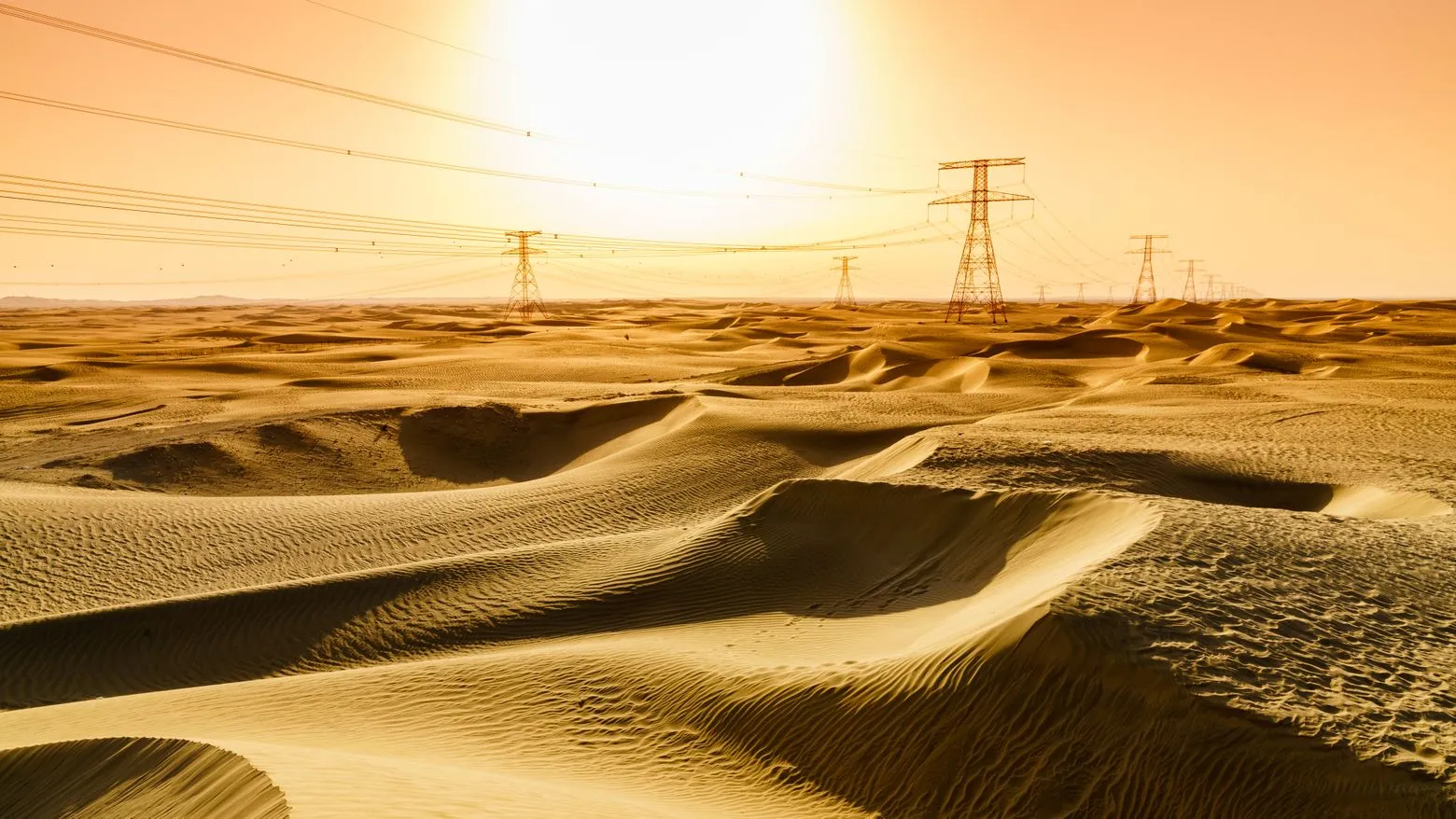
Industrial consumption patterns vary across the emirates, but one constant is the dominant position held by buildings. Around 70% of the total energy produced for the UAE is consumed by these, when energy consumed for operations – heating, lighting and cooling – is added to the energy embodied in building construction and building material manufacture. [1]
As a hot country, cooling accounts for 50%-70% of the UAE’s electricity consumption in residential, commercial and retail buildings – by far the largest single element in the country’s non-industrial power demand. [2] [3]
This demand surges, too, in the summer months, when outside temperatures can reach above 40C. This also produces stronger household demand for water, with this also hiking demand for electricity, as the UAE – in common with all Gulf countries – produces most of its water from desalination plants. Indeed, this highlights a key factor in the UAE’s energy transition – energy and water are inextricably linked in the Emirates in what is known as the ‘energy/water nexus’.
Given the high energy intensity of this interconnection, the government is particularly keen to embed the energy transition right at the design stage of new construction, cutting structural energy and water usage in building, with this having the knock-on effect of boosting energy efficiency in residential.
Driven by the Dubai Supreme Council of Energy (DSCE), the updated DSM Strategy 2030, for example, includes new green building code requirements and a boost for building retrofits. Outdoor lighting and efficient cooling elements are also included – both vital for residential and commercial new building.
There are also minimum energy performance standards (MEPS) requirements for building materials and energy efficiency, along with such measures as smart metering of water and power consumption. [4]
Smart water meters are also proving increasingly popular with consumers, with this enabling real time analysis and better demand and supply-side management. [5] The Dubai Electricity and Water Authority (DEWA), for example, reported that it had installed over 1 million of these by June 2024, providing 100% coverage for the emirate. [6] Smart district cooling is also a way for larger residential projects to boost energy efficiency. District cooling is a key part of strategies such as Abu Dhabi’s DSM and Energy Rationalisation Strategy, 2030, providing around 9% energy savings compared to business-as-usual. [7]
Smart metres can also play a key role in integrating increasing amounts of variable renewable energy (VRE) – solar and wind power being the chief examples – into the national grid.
Here, AI could be vital, integrating the data from smart metres with VRE in order to optimise demand and supply. AI can also integrate weather data into such systems while also using predictive maintenance to cut costs and boost a whole range of other efficiencies. While consumers can already take advantage of dynamic pricing systems, shifting high consumption to cheaper, off-peak periods of the day, future AI systems may be able to take on such roles themselves, either autonomously or semi-autonomously, shifting demand to times when supply is cheaper and/or more abundant. [8]