Happily, this question is becoming easier to answer as the energy transition in the UAE and elsewhere gathers momentum.
On the one hand, basic prices for renewable energy equipment have been on a downwards trend for some years now. On the other, much of the enabling regulatory and financing frameworks are also now coming into place to open up the market to consumers.
At the same time, too, there is also a growing awareness of the need for change in the pattern of energy consumption – and a growing determination amongst the general public and administrators to rapidly make that change a reality.
Plans and pathways
Financing for consumers in the energy transition has many aspects to it, from funding net metering roll out to electric vehicle (EV) loans, and from retrofitting buildings to waste and recycling campaigns.
Financing for these can come from direct government subsidy, private sector initiative, or local non-governmental organisations (NGOs), with a combination of all three often the most effective.
In the UAE, government support schemes are usually direct subsidy-free, with regulation and facilitation the preferred options.
With net metering, for example, as part of its Distributed Renewable Resources Generation Programme, the Emirate of Dubai set up the Shams Dubai scheme back in 2014.
Net metering has the advantage over wholly independent consumer power generation schemes in that consumers remain connected to the national grid, giving their power supply reliability, while also enabling them to take advantage of lower cost solar power. Net metering also enables consumers to receive the retail rate for the power they feed back in.
Shams Dubai thus brought the emirate’s power and water provider, the Dubai Electricity and Water Authority (DEWA), together with a range of commercial and residential building owners and engineering groups to install rooftop solar photovoltaic (PV) panelling. [1]
The solar PV panels generate power for local consumption, with surpluses immediately being fed back into DEWA’s grid. [2] By October 2019, some 1,354 solar PV installations had been completed under the scheme, with a total capacity of 125 megawatts (MW). Shams Dubai has a goal of 500MW by 2030. [3]
The scheme’s popularity also attracted ideas for much larger schemes, bringing together groups of companies and residencies. However, in 2020, a limit of 2.08MW was set for the size of these installations, with this later reduced to 1MW. Ground-mounted schemes were also ruled out, to preserve the idea of this as a programme for small scale ‘prosumers’. [4]
A similar programme was launched in the Emirate of Abu Dhabi in 2017. The Small-Scale Solar PV Energy Netting (SSSPVEN) net-metering programme brought together the Abu Dhabi Distribution Company (ADDC), the Regulation and Supervision Bureau – Abu Dhabi (RSB – Abu Dhabi), commercial and residential building owners and contractors to install solar PV panels for distributed generation and the feeding of any surplus back into the grid. ‘Small scale’ in this instance describes schemes under 5MW. [5]
In Sharjah, net metering is a feature of Sharjah Sustainable City, a dedicated green development being rolled out by Diamond Developers and the Sharjah Investment and Development Authority (Shurooq).
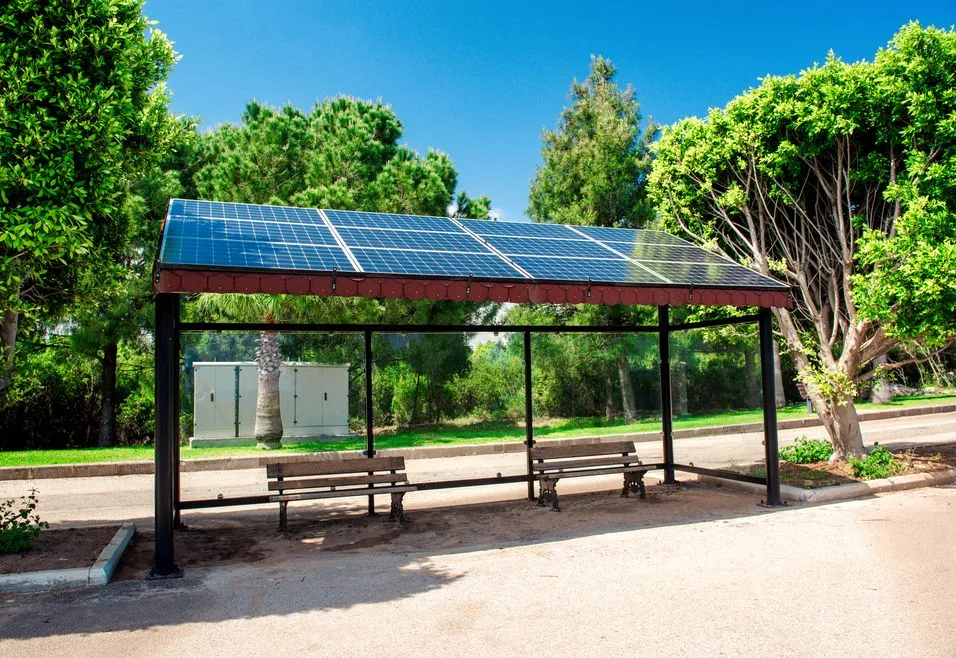
Rooftop schemes have their challenges, however, when it comes to finance. Households and businesses have to fund the cost of the panels and their installation themselves, with the return on investment (ROI) coming in the form of lower future bills.
Yet, with electricity prices historically relatively low in the UAE, given the country’s major energy resources and past policies of power and water subsidy, that ROI can be elusive.
One way to tackle this is via a positive finance regime from the banks.
A number of easy payment plans for solar PV projects are now available from lenders such as Mashreq Bank, Emirates NDB and RAK Bank, enabling the cost to be spread at a relatively low rate of interest. [6]
In addition, in September 2023, Emirates Development Bank (EDB) launched its AED100 million Solar Energy Finance Programme. This is aimed at micro, small and medium-sized enterprises (MSMEs) and provides them with medium and long-term loans and working capital at favourable rates for sustainability-targeted projects. Loans with a term of up to eight years are available under the scheme for solar panels. [7] Such a scheme should help the growing number of contractors in the UAE either producing equipment or installing it. One of these, CleanMax, also recently established a long term credit facility with the National Bank of Fujairah (NBF) to finance its UAE portfolio. [8]
A further resource is the Dubai Green Fund, DEWA’s investment arm. This enables corporate renewable energy investors to obtain loans for projects such as roof top solar and other energy efficiency projects, with successful examples up and running at Dubai International Airport and the Jebel Ali Free Zone. [9]
On an even larger scale, Masdar’s green bond initiatives – the Abu Dhabi backed energy group raised $1 billion with one bond in July 2024, after raising $750 million with its first, back in 2023 – have also been used to fund renewables projects in both the UAE and abroad. [10]