Indeed, the International Panel on Climate Change (IPCC) 6th Assessment Report estimated just before COP28 last year that $1.8 trillion of investment in climate resilience alone was needed, worldwide, up to 2030. The Climate Policy Initiative found, however, that only $46 billion a year was currently going into this sphere. [1]
At COP28 itself, a report from the UN’s Independent High-Level Expert Group on Climate Finance (IHLEG) also declared that globally, a five-fold increase in concessional finance, a threefold increase in multilateral development bank finance and a fifteenfold increase in private finance would be needed to meet the climate change needs of only developing and emerging markets, let alone developed economies, up to 2030.
COP29 is due to see a new push for a global goal on climate finance, although the exact figure is still to be agreed. As an indicator, however, in September 2024, a pre-COP29 meeting of African environment ministers called for $1.3 trillion to now be injected into climate finance. [2]
For the UAE, the up-front costs are also high. Energy producers in the country – a combination of private and state-owned, or state linked companies – must finance a shift to renewables, combat emissions through new technologies and methods, boost energy efficiency through new infrastructure and digitisation and tackle the already-apparent impacts of climate change on their infrastructure.
Those impacts can be on the demand side – July 9, 2024 saw the heat hit a record 50.8oC near Al Ain in Abu Dhabi [3] – and on the supply side, as power systems overheat and unusual storms bring down and short transmission lines. [4]
Climate change can also impact producers’ fundamental financial positions. Costs such as insurance are beginning to rise and risk mitigation strategies are increasingly demanded by financial institutions before agreeing new loans and refinancing packages.
Faced with this range of challenges, finding innovative and sustainable ways to finance the transition becomes ever more critical. Fortunately, the UAE has a range of opportunities available for producers to offset the growing costs of the energy business.
Green bonding
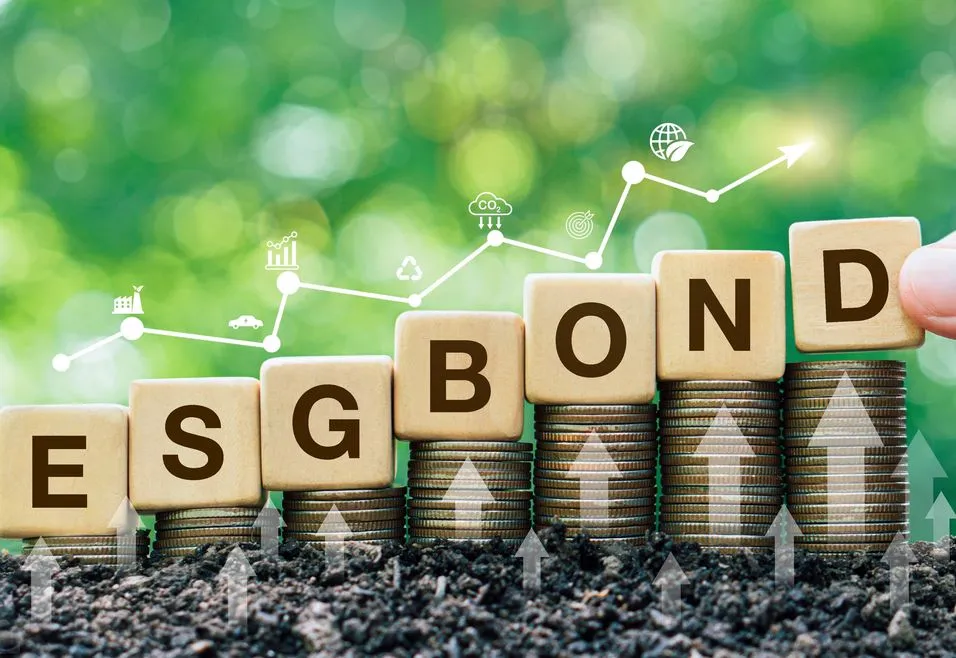
One of the principle methods of financing the energy transition is the green bond or sukuk. This is a type of issuance where the receipts go towards financing projects that bring environmental benefits.
Related papers include sustainability and sustainability-linked bonds. With these, a mix of environmental, social and governance (ESG) benefits are involved. Then there are transition bonds, where the funds are to be used strictly for energy transition-based initiatives.
The overall group is known as ‘GSS+ bonds’. While these are mostly issued by sovereigns and government linked entities, they are increasingly available to private sector outfits, too.
Indeed, according to the Climate Bonds Initiative, $554 billion of GSS+ volume was captured in 1H24 alone – a 7% year-on-year increase on 1H23. [5]
GSS+ bonds have also been surging in recent times throughout the Gulf Cooperation Council (GCC). Bloomberg reported 2023 as a record year for the region, with issuance twice the level of 2022 at $14.6 billion, up to November 23. [6]
While the largest single issue in that year-to-date was in Saudi Arabia – a $5.5 billion multi-tranche bond from the kingdom’s Public Investment Fund (PIF) – the bulk of issuances overall were from the UAE. [7]
Several of the key Emirati issuers were banks – Abu Dhabi Islamic Bank issued a $500 million green sukuk, twice oversubscribed, for example, while Emirates NDB Bank issued a $750 million green bond, largely snapped up by European investors. [8]
In 2022, Dubai Islamic Bank, the UAE’s largest shariah-compliant bank, had also issued a $750 million debut sustainable sukuk, followed by a $1 billion issuance in 2023. [9] These banks then use the funds raised to invest in projects that meet green and ESG standards.
Sustainable Islamic bonds continued to grow in the UAE in 2024, too. In May, Emirates Islamic issued a $750 million 5-year sustainable sukuk, with this following the April 2024 release of the combined, London Stock Exchange, Islamic Development Bank, ICMA guidance on GSS+ sukuk. [10]
Other bond issues have been by power producers themselves.
In January 2022, Sweihan PV Power Co. (SPPC) issued some $700.8 million in the first green project bond in the Middle East and North Africa (MENA) region. SPPC owns operates and maintains the Noor solar photovoltaic (PV) plant in Abu Dhabi. [11]
This was followed in 2023 by Masdar, the state owned renewable energy company. In July 2023, Masdar completed its first, $750 million 10-year green bond offering on the London Stock Exchange (LSE). This was more than five times oversubscribed. [12] In July 2024, Masdar returned to the market to issue a follow-up $1 billion green bond, with the precedes earmarked for funding renewable energy projects around the world. [13] [14]

Rules and regulations
COP28 also highlighted a key current issue with green bonds and sukuk – their global regulation.
Currently, the International Capital Markets Association (ICMA) has a set of Green Bond Principles outlining the key components necessary for a green bond issuance. [15] Under this, issuers must produce a Green Bond Framework, showing how the proceeds of the issuance will be used for green projects.
Clearly, this process – currently voluntary – is open to much interpretation and little on-the-ground monitoring. This is, however, changing, with banks now more often calling for more specific reports from those lent funds raised by GSS+ issuances. COP28 also saw a further effort to agree an international standard for GSS+ and its monitoring, with COP29 set to see further efforts on this subject.

The UAE sees the role of government in energy transition finance principally as that of facilitator, enabling public and private fund mobilisation. The Emirates has also established a number of incentive schemes for producers engaged in the energy transition, while as a producer itself, it has also mobilised finance for state-owned and state linked power producers.
Schemes include the Abu Dhabi Department of Economic Development (ADDED) Energy Tariff Incentive Programme, launched back in 2019 and expanded in 2022. The scheme gives preferential gas and electricity rates for businesses that perform well in terms of energy efficiency, amongst other factors. [16]
Other programmes include the Shams Dubai and Abu Dhabi Small Scale Solar PV energy Netting net metering schemes, which give financial incentives for rooftop solar projects (see Section 1). The Dubai Green Fund and green building regulations, such as Abu Dhabi’s Estima Pearl System, also incentivise the construction of energy efficient buildings.
After the Dubai Carbon Centre for Excellence started issuing Clean Energy Certificates (CECs), in 2022, Abu Dhabi’s Department of Energy also launched a highly successful CEC scheme. Under this, companies from across the economy can obtain CECs that certify they are the recipients of clean energy. The 1 megawatt hour (MWh) certificates can then be traded, creating an indirect incentive for producers to switch to clean energy and boost their attractiveness to would-be CEC traders. [17]
In addition, the UAE government supports energy storage projects with tax credits and subsidies, [18] while research and development (R&D) in this area is also backed up by Masdar. Indeed, supporting innovation is a major way in which governments as well as corporates can support the energy transition and assist producers.
An example of this is R&D in the education sector, with Sharjah, for example, home to the Sharjah Research Technology and Innovation Park. There, renewable energy, environmental technology and water management are three of its priority areas. [19] The emirate’s universities also offer courses in environment and renewable energy development.
The UAE also offers a number of programmes aimed at mobilising energy transition investment internationally.
Among these is the Alterra climate fund. This is a public-private partnership that brings the UAE together with Lunate – a consortium of global asset managers – to allocate $30 billion on climate-related investments. [20] The fund has two parts – Alterra Acceleration, with $25 billion to use for anchor investor projects, and Alterra Transformation, which has $5 billion to incentivise investments in the Global South. [21]
The UAE is also working with the US government in the Partnership for Accelerating Clean Energy (PACE), which aims to facilitate the deployment of $100 billion and 100 gigawatts of clean energy worldwide by 2030. [22] In August 2023, this saw ADNOC and Occidental sign a strategic partnership agreement in carbon capture and storage (CCS) in the UAE and US.
Mitigating risk
At the same time, producers are increasingly being asked by financial institutions and government agencies to focus on climate change mitigation strategies in their future planning.
The UAE’s National Climate Action Plan and National Climate Change Plan 2050 recognise these risks and set out to support climate adaptation by energy producers, as well as other businesses.
Such adaptation can involve infrastructure changes at an existing plant, or changes at the design and construction phases of new developments.[22] It can also include adapted financial planning, with insurance playing a growing role. Globally, this is an area still evolving, with ideas such as a national catastrophe insurance pool being recently mooted in neighbouring Oman.[23] Financial institutions are certainly already taking steps to assess the level of climate change risk they are exposed to, with the UAE Sustainable Finance Working Group (SFWG) producing a new set of principles for managing such financial risks in November 2023.[24]
In the UAE, the Ministry of Climate Change and (MoCCAE) in particular has been engaged with this issue, working with insurers, takaful and reinsurance companies to develop viable solutions to what will likely be a growing challenge.
Plenty for producers to consider then, as the UAE braces for a world of increasingly wild weather.