
At one time or other, all the technologies on which the energy transition now depends – from solar panels to hydrogen electrolysers and AI programmes – were sitting in a lab or test site, or the subject of a thought experiment at a scientific and engineering workshop.
Without innovation, the transition would be impossible – yet without regulation, innovation can wither on the vine.
Providing a robust, flexible and responsive regulatory framework for research and development (R&D) and the commercialisation of its discoveries is therefore a vital aspect of the energy transition.
Indeed, without a solid and reliable body of laws and standards, few investors – private or public – will touch projects that often have high upfront costs and – by their very nature – carry considerable risk.
R&D also requires a reliable regime of intellectual property (IP) rights in place – one that is recognised and enforceable, internationally.
Fortunately, in the UAE, a wide range of scientific and technical establishments exists, with both the federal and emirate-level authorities keen to encourage investment in innovation and technological development via a robust set of regulations.
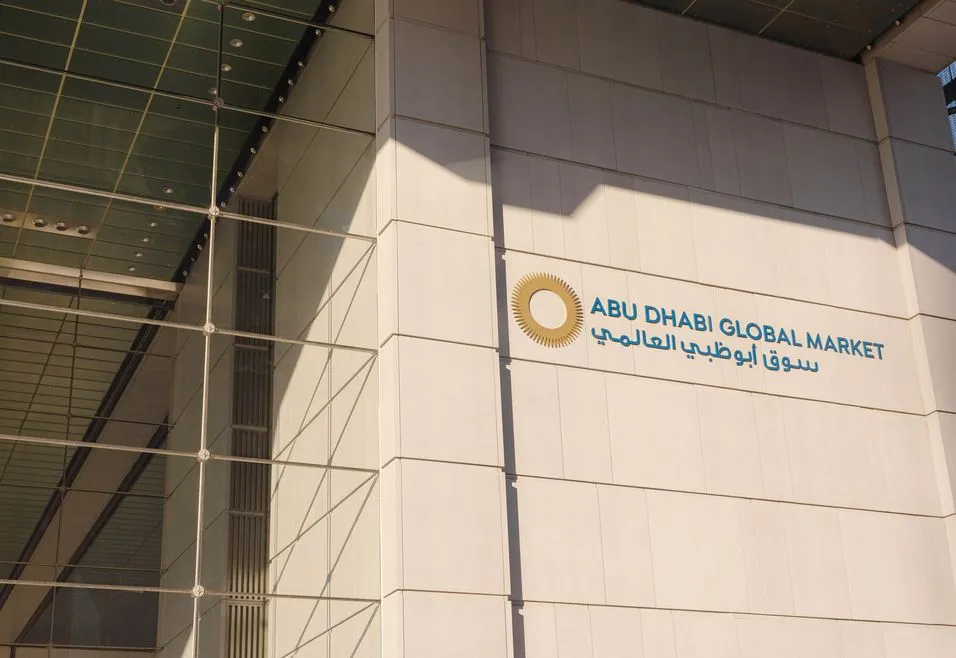
Abu Dhabi Global Market
Green zones
R&D in the UAE tends to be either within the higher education sector and associated facilities, or within bespoke, public and/or private sector funded projects.
Dubai has an impressive range of all of the above, from MSc programmes in renewable energy engineering at Herriot-Watt University’s Dubai campus to the R&D centre at the Mohammed bin Rashid Al Maktoum Solar Park. The latter is looking at smart grid integration, water desalination, solar photovoltaic (PV) and concentrating solar power (CSP) technologies and houses the region’s first green hydrogen production facility. [1]
That facility is being developed in partnership with the Dubai Electricity and Water Authority (DEWA), which itself has a range of innovative projects ongoing. These include Digital DEWA, which is developing and implementing autonomous systems for renewable energy storage, solar technologies, AI and other fields of digitisation. [2] The Dubai Science Park free zone also has an established pedigree of R&D in a range of areas. [3]
Dubai is also home to the Dubai Green Fund, available to both foreign and domestic investors and offering tax exemption and visa benefits. The Fund also supports cleantech investment in energy, waste and water, green transport and buildings, and sustainable agriculture. [4]
The Dubai Future Foundation’s Dubai Future Academy and its associate, Dubai Future Research, also back projects in energy transition innovation and research, both in the UAE and abroad. [5]
Elsewhere, Sharjah has long had a strong tradition in the higher education side of R&D. The Sharjah Research Technology and Innovation Park (SRTIP) is home to 22 universities and academic institutions, with around 3,000 companies and partners currently accredited. SRTIP has programmes on renewable energy, water management, environmental technology, digitalisation, smart manufacturing and building and transport and logistics – all key areas in the energy transition. It also runs accelerator and angel programmes to encourage start-ups and innovators and connect them with venture capital and other investment funds. [6]
Abu Dhabi, meanwhile, was a pioneer with the Abu Dhabi Future Energy Company, more widely known as Masdar. This not only has utility-scale and rooftop projects of its own, but also invests in a range of innovation programmes in renewables and green hydrogen. Many of these are clustered in Masdar City, now home to around 1,000 companies developing new technologies in renewables, energy storage, AI, health, space and mobility. [7]
At the federal level, schemes such as the Emirates Green Building Council are also advancing energy efficiency and smart building technologies across the UAE. The Ministry of Energy and Infrastructure (MoEI) and the Ministry of Climate Change and the Environment (MoCCE) also support a range of R&D initiatives around the country. The Minister of State for AI, the Digital Economy and Remote Work Applications (MADR) is also a key body in the roll out of AI applications across a wide range of energy-transition linked fields.

Frameworks
The technology and the R&D know-how are therefore certainly present in the UAE. Backing this up is a regulatory framework that is also friendly to the innovation ecosystem.
This includes a long-standing tradition of free zones, now adapted to dedicated technology and education hubs and offering favourable taxation, customs and visa regimes, along with 100% foreign ownership and one-stop-shop facilities.
The free zones also have their own authorities, with two financial zones, the Dubai International Financial Centre and the Abu Dhabi Global Market, also following English common law for business. This may also soon be extended to other free zones in the emirate of Dubai. [8]
At the same time, the UAE authorities’ transition plans all include specific reference to the government’s wish to encourage further innovation, R&D and commercialisation of energy transition projects in the country.
In the light of this, in April-May 2024, the Ministry of Finance launched a digital consultation on corporate tax initiatives to encourage R&D expenditure. [9] The results of this, when brought into the tax code, will likely encourage further investment in the UAE’s thriving technology scene.