
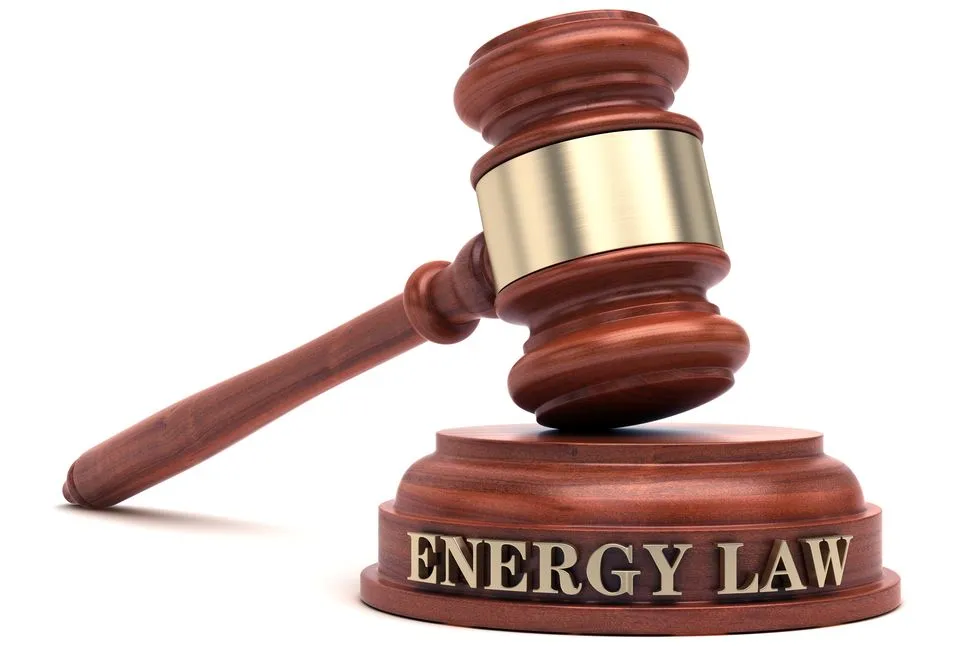
Establishing a favourable, flexible and robust regulatory regime for producers is a crucial part of the energy transition. Without this, new investors will shy away and old practices will likely remain dominant. With such a regime, however, foreign and domestic investment will flow into the transition, while producers will have the security and stability they need to make the large-scale, long-term commitments necessary to transition to the clean energy economy.
In the UAE, the signs are that the regulatory framework is already achieving that flow. In 2022, the country attracted $36 billion in foreign direct investment (FDI) in renewable energy projects alone, a figure 10% up on 2021 and the 16th highest total, worldwide. [1] In 2023, renewable energy was the third highest recipient of greenfield FDI in the country, at $1.75bn, with the Masdar-EDF Warner Bros. World solar project on Yas Island the largest, at $633 million. [2] [3]
Nuts and bolts
Regulation of the energy sector is both a federal and emirate-level business in the UAE.
At the federal level, the Ministry of Energy and Infrastructure (MoEI) and the Ministry of Climate Change and the Environment (MoCCE) are the two key bodies.
At the emirate level, in Abu Dhabi, at the policy, regulation and strategic level there is the Department of Energy (DoE). As the provider of water and electricity, there is the Emirates Water and Electricity Company (EWEC); and, as the emirate’s commercial operator in the sector, there is the Abu Dhabi Power Corporation (AD Power). [4]
In Dubai, the Supreme Council of Energy (SCE) is the strategic policy maker, while the Regulatory and Supervisory Bureau (Dubai RSB) deals with monitoring and application of the rules. Then, the Dubai Electricity and Water Authority (DEWA) is exclusively authorised to manage, operate and maintain power and water generation, transmission, and distribution.
In Sharjah, the Sharjah Electricity, Water and Gas Authority (SEWGA) is responsible for generation, transmission and distribution and the setting of tariffs and fees. The Northern emirates work to the MoEI and the Etihad Water and Electricity Co. (Etihad WEC), the federal water and electricity provider. [5]
The DoE, DEWA, SEWGA and Etihad WEC are all sole off-takers, authorised to grant generation and production licenses to producers, which themselves may be either public or private companies. [6]
Independent power producers (IPPs) sign contracts with these authorities, with utility-scale projects undertaken in partnership with government or government-owned entities.
Distributed energy generation takes place within the framework of particular schemes, such as Shams Dubai, which is governed by Regulation 46 of the emirate’s Executive Council, and Abu Dhabi’s Small Scale Solar PV Energy Netting regulation of 2017. There is also the Federal Distributed Energy Law governing such schemes in the Northern Emirates and those free zones and special zones that come under federal jurisdiction. [7]
In hydrogen, there is also the National Hydrogen Strategy 2050, which aims to develop the domestic hydrogen market through establishing a clear regulatory framework for this new industry. Cabinet Resolution 42 of 2021 also sets out standards and requirements for hydrogen fuelled vehicles. [8]
All transmission and distribution activities are state-owned and controlled, throughout the UAE. [9]
In future, too, as AI takes more of a role in energy transition, a sound regulatory infrastructure for this technology also becomes vital. The UAE’s Minister of State for AI, the Digital Economy and Remote Work Applications (MADR) will therefore also be working more closely in partnership with the MOEI as this develops and the UAE implements its National Strategy for AI 2031. [10]
Reading the small print
One way in which the energy transition is being encouraged through regulation is in the use of public competitive tendering for utility-scale projects.
So far, this has been the main method for awarding renewable power projects in the UAE, with the consequence that a series of record-breaking low tariffs have been generated.
Producers have been able to take advantage of the falling costs of solar PV panels and systems in particular, along with – until recently – historically low interest rates. Such low eventual tariffs also enabled renewable energy to be competitive in a country where customers are used to low electricity and water costs, with a high level of subsidy, historically.
Such a bidding process relies on a sound regulatory framework to enable the bidders to look at the long term, with robust off-take agreements over a lengthy period therefore essential. The UAE has been able to demonstrate this and that renewable projects in the country are therefore low risk and bankable, with agreements of a 20-25 year nature. [11]
Further removal of any price barriers to open competition will likely further improve renewables’ competitiveness and accelerate the energy transition. It may be a challenging move to make, however, requiring careful balancing of economic and social objectives. Nonetheless, as the UAE transitions to net zero, it will be an important key to redrawing the country’s energy map.
“Regulatory frameworks and industry standards are increasingly aligning AI development with decarbonization objectives. By continuing to innovate responsibly, AI can act as a powerful enabler of global sustainability while addressing its own environmental footprint.”
Harsh Kumar, Chief Strategy Officer & Co-Founder, Shipsy